
Featured Media
-
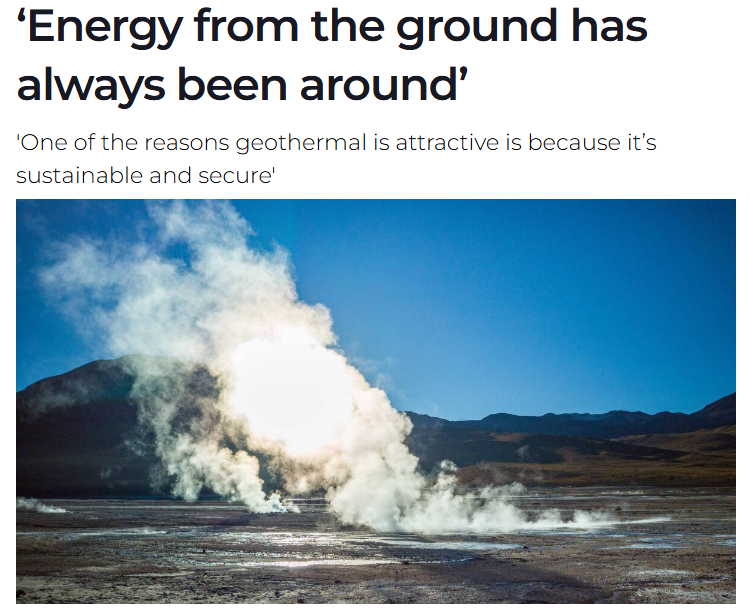
![Geyser erupting with steam and water in geothermal area with mountains in background.]()
Irish Examiner - Energy from the ground has always been around
-
![Digital illustration of a large conference hall with many curved rows of seats and a stage with a giant microphone in the center. Two green signs with 'S4P' are displayed on screens on each side of the stage. The scene has a futuristic, sci-fi feel with laboratory test tubes and scientific equipment placed on the desks.]()
Science4Parliament - Episode Six - Dr. Nicholas Vafeas - Geothermal Energy
-
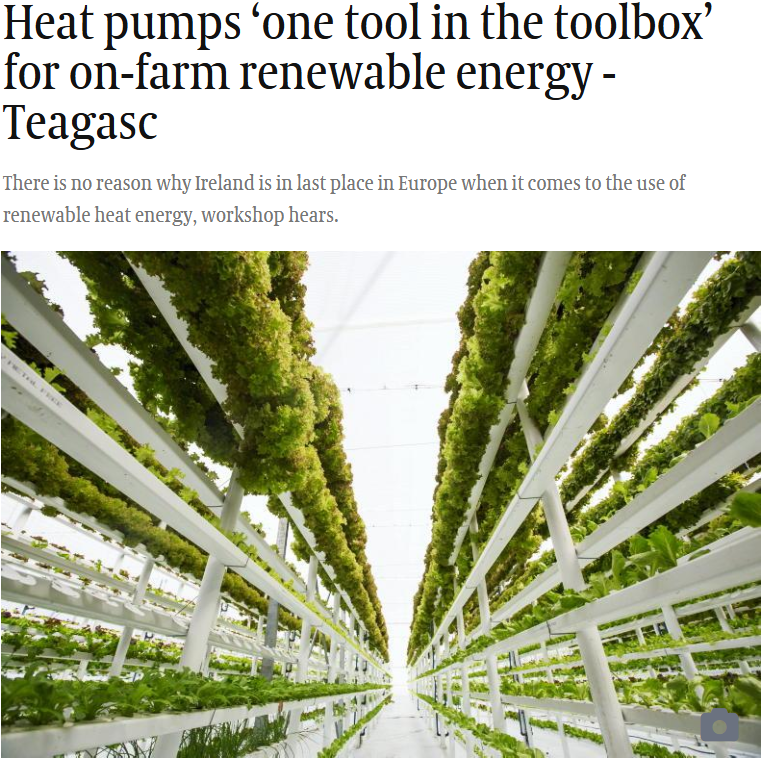
![Indoor vertical farm with rows of leafy green vegetables growing under artificial lighting.]()
Farmers Journal - Heat pumps “one tool in the toolbox” for on-farm renewable energy
-
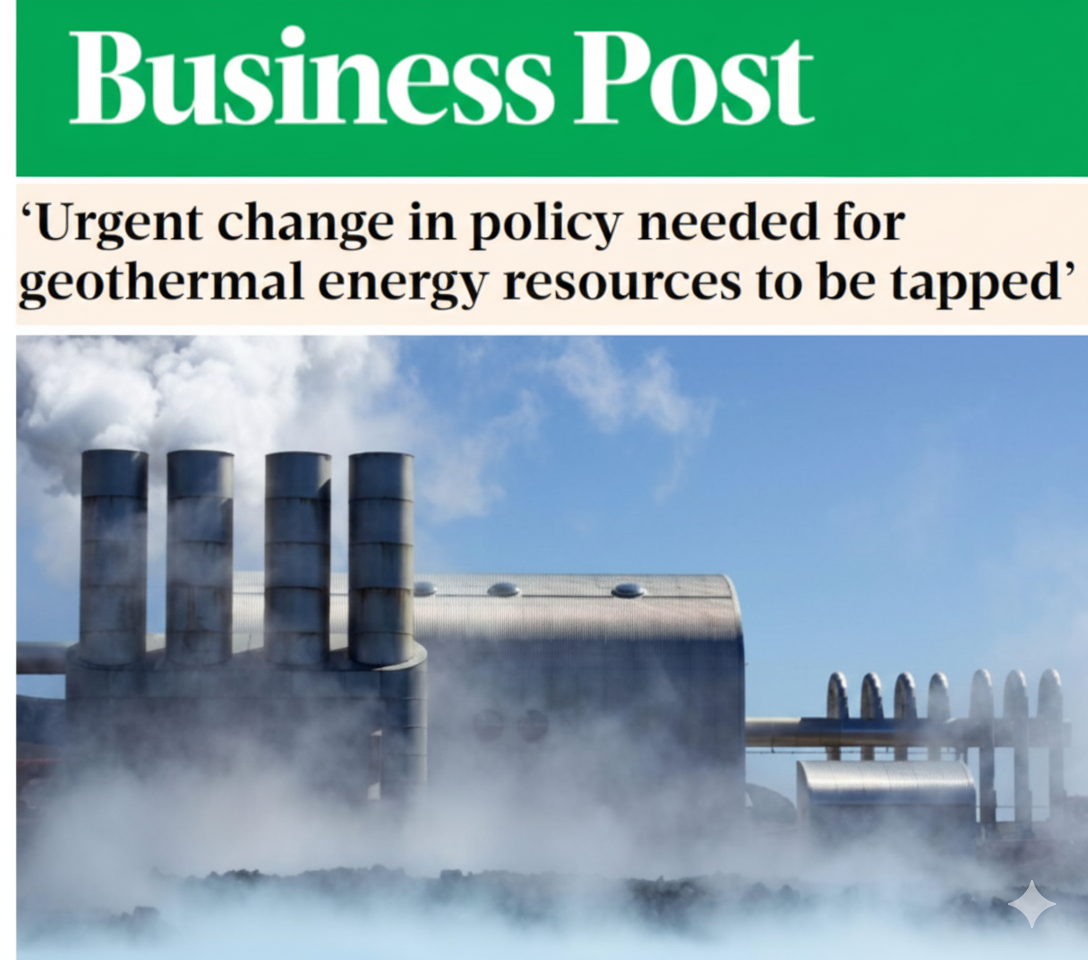
![An industrial facility with multiple smokestacks emitting smoke and vapor, with a blue sky and some clouds in the background.]()
Business Post - Urgent change in policy needed for geothermal energy resources to be tapped


Parliamentary Reports
Geothermal Energy - Barriers and advantages to adoption in Ireland. 2021. Oireachtas Library and Research Service.
Irish parliamentary policy report on geothermal energy. It provided evidence-based insights to national policymakers, directly informing subsequent geothermal strategies in the Republic of Ireland and Northern Ireland. The report catalysed cross-departmental dialogue on geothermal potential and regulatory reform and was presented to Members of Parliament.
Scientific Publications
-
This study proposes the Critical Dominance Opportunity Index (CDOI), a novel metric that reframes critical-mineral assessment around the contestability and structural openness of value chains. The framework demonstrates that minerals already characterised by entrenched market dominance may offer limited strategic return on further intervention, while less concentrated systems present greater opportunity for diversification, resilience, and long-term supply security.
Resources Policy - DOI: 10.1016/j.resourpol.2026.105988
-
The world-famous and culturally significant “Transvaal Jade” hydrogrossular assemblage developed through two genetically distinct fluid events associated with chromite-bearing lithologies of the Bushveld Complex. The first event involved infiltration by a platinum-group element (PGE)-bearing, Ca-rich, moderately alkaline, silica-undersaturated brine that metasomatically replaced primary anorthitic plagioclase with hydrogrossular garnet, while partially oxidising chromite to ferri-chromite-magnetite. A second, later fluid pulse, markedly more basic and derived from serpentinisation of surrounding ultramafic rocks, introduced a pervasive serpentine meshwork, cross-cutting and overprinting the earlier alteration. Petrographic, mineral chemical, and geochemical analyses confirm that the Transvaal Jade represents a rodingite-like metasomatic system formed at upper greenschist to lower amphibolite conditions (inferred from mineral assemblages) and near-neutral to alkaline, moderately oxidising fluids, with selective mobility governed by fluid composition and redox-controlled Fe fixation. These preliminary findings resolve a distinct reaction-front signature of fluid alteration within the Bushveld Complex, herein referred to as the “Transvaal Jade Alteration Front.” Furthermore, this study refines and expands earlier models, linking the cultural gemstone value of this rock to a complex fluid-rock interaction history with implications for critical metal mobility in layered intrusions.
South African Journal of Geology: https://doi.org/10.25131/sajg.128.0022;
Mindat.org
-
Abating emissions and reducing atmospheric concentrations of carbon dioxide (CO2) are crucial in avoiding catastrophic climate change. Basalt reservoirs offer suitable CO2 storage sites and are present onshore and offshore. This study compares the geological, economic and social aspects of CO2 storage in both domains using two basalt formations from the Republic of Ireland: the Limerick Igneous Suite and the Druid Formation. Offshore reservoirs offer larger storage resources but are more expensive to develop. Nevertheless, both offer gigatonne-scale theoretical CO2 storage. Reviewing public perception studies on wind energy demonstrates that the commonly held belief that offshore projects face less opposition owing to their distance from communities has been dispelled, while similar studies on carbon capture and removal show no preference for onshore or offshore development. Instead, a general scepticism towards carbon removal is observed, with concerns that it hinders broader decarbonization efforts. The desire of all stakeholders to be involved throughout project development is consistently observed. Lessons from offshore natural gas projects highlight the consequences of failing to engage with local communities. The Republic of Ireland has significant potential to deploy geological CO2 storage in basalt reservoirs, but policy hurdles such as legal limits on storage volumes must be overcome to reconcile climate ambition and legislative capacity.
Earth Systems and Society: https://doi.org/10.1144/esss2024-016
-
The European Union's objectives under the Green and Digital transitions, are contingent on the decarbonisation of essential sectors such as energy, transportation, and communications. At present, the EU does not have sufficient identified mineral resources, nor processing capacity, to supply many of its strategically defined materials. The success of these objectives hinges on the EU's ability to secure a stable and consistent supply of critical raw materials (CRM). Using a systematic three-part assessment of mandated and non-mandated EU policies, European Commission communications, and a review of CRM, the findings reveal that despite efforts to enhance local supply and diversify foreign sources of CRM, there is a lack of cross-sector coherence across social, economic, and technical aspects of recycling. This is further exacerbated by inefficient retention of waste-hosted critical raw materials. Failure to adopt integrative policy measures may result in the EU's continued dependency on undiversified foreign sources for its supply of critical raw materials, thereby compromising its strategic autonomy as well as the goals of the Green and Digital transitions. Improved design of electrical and electronic equipment and processing of waste from these products could conceivably provide a mechanism for a continuous and retained supply of critical raw materials, culminating in a potentially significant resource stream for the Union. The EU can improve resource efficiency, reduce its dependence on imports, and facilitate a truly circular economy by adopting a comprehensive and symbiotic policy framework that quantifies material resources in waste and that recognises the product design stage as an integral facet of the product recycling stage, herein referred to as “forwardcycling”.
Resources Policy: https://doi.org/10.1016/j.resourpol.2024.105380
Zenodo.org -
Uranium-Pb dating of unusual coarse-grained apatite crystals from hydrothermal dolostone breccia in the barite-rich Magcobar zone at the Silvermines deposit, Ireland, indicates an age of 331 ± 5.6 Ma for hydrothermal alteration. This age is in agreement with an Re-Os age on pyrite-sphalerite but differs from previous estimates that were based on palemomagnetism and sphalerite Rb-Sr geochronology at Silvermines. The new U-Pb age indicates the deposit largely formed epigenetically rather than as a synsedimentary deposit. The trace element composition of the apatite provides additional constraints on the geochemical evolution of the Silvermines hydrothermal system indicating that it was initiated with the expulsion of oxidizing fluids responsible for early hematite-silica precipitation. This was followed by the formation of hydrothermal dolostone breccias containing barite and the apatite dated here. The infiltration of metal-bearing hydrothermal fluids, likely derived from the basement, overlapped and followed the development of hydrothermal dolostone breccias, interacting with Carboniferous seawater during dolomitization and barite precipitation. Near-sea-floor biogenic activity, possibly enhanced due to escape of hydrothermal fluids, resulted in the reduction of seawater sulfate and formation of the sulfide-bearing fluids that facilitated the development of the Silvermines Zn-Pb deposit.
Resources Policy: DOI:10.5382/econgeo.5016
-
A concise, cross‑disciplinary synthesis of Ireland’s deep‑geothermal potential, linking subsurface geology and temperature gradients to feasible end‑uses (district heating, industry, and horticulture). The paper identifies prospective reservoir types and regions, highlights data and regulatory gaps, and outlines practical steps for pilot projects—establishing a baseline reference for policy, industry, and research planning across the island. http://hdl.handle.net/10197/25189
-
Demonstrates that ore‑forming manganese at Montaña de Manganeso derived from multiple sources and processes, integrating mineralogical observations with major/trace element and isotopic datasets. The model moves beyond single‑source interpretations to a mixed fluid–rock interaction system, improving genetic understanding and providing geochemical vectors relevant to exploration in analogous carbonate‑hosted Mn deposits on the Mexican Plateau. https://doi.org/10.1016/j.chemer.2021.125789
-
Establishes an integrated geochemical framework for the genesis of the Montaña de Manganeso vein-type deposit, constraining fluid sources, redox evolution, and fluid–rock interaction. The results clarify metal transport and precipitation mechanisms, provide a reference paragenesis for regional Mn mineralization, and lay the foundation for subsequent modeling and targeting in central Mexico. https://doi.org/10.1016/j.oregeorev.2020.103680
-
Gold in South Africa is a topic of deep technical and cultural discussion. This study provided the first detailed geochemical and structural characterisation of orogenic gold mineralisation in the Giyani Goldfield, refining exploration models for the northern Kaapvaal Craton. https://doi.org/10.25131/sajg.122.0037
-
This study introduced a novel geochemical discrimination scheme using arsenic as a proxy to distinguish alteration events in the Kalahari Manganese Field. The approach enabled the identification of the previously unrecognised Mukulu Enrichment, offering a powerful tool for exploration and improving ore targeting strategies in manganese deposits. https://doi.org/10.1016/j.oregeorev.2019.103146
-
This study represents the first application of the Rb-Sr radiogenic system to date manganese deposition in the Kalahari Manganese Field. The resulting age aligns with prior petrographic and cross-cutting relationships, providing a robust geochronological benchmark and strengthening regional geological models. https://doi.org/10.25131/sajg.122.0016
-
The first U-Pb age date for erosion along the Kalahari unconformity, an age that until then, had been estimated based on geological relationships. The refined age redefined boundaries of erosion that therefore had implications for alluvial diamond mining along the interior and west on South African. https://doi.org/10.25131/sajg.121.0012
-
In this study, uniquely large and globally rare manganese mineral phases from the Kalahari Manganese Field were analysed and characterised both mineralogically and geochemically, expanding on the limited global understanding of todorokite-cryptomelane assemblages. The findings provide critical insights into low-temperature manganese ore genesis and crystallographic transformations relevant to both academic and industrial mineral processing. https://doi.org/10.3749/canmin.1700043
-
This paper provided the first detailed mineralogical evidence supporting the identification of a secondary enrichment event, termed the “Mukulu Enrichment”, above the Blackridge Thrust Fault. The findings contributed to a revised genetic model for manganese mineralisation in the Kalahari Manganese Field and supported subsequent resource targeting in structurally complex zones. The findings contributed directly to the industrial exploitation of a newly identified manganese ore deposit. https://doi.org/10.1111/iar.12280